
As artificial intelligence continues to transform industries, many homeowners are turning to AI tools for interior design inspiration. With just a few clicks, you can generate stunning living rooms, bedrooms, and entire homes.
But here is the truth—AI is a starting point, not a solution.
In a design-forward city like Atlanta, where architecture, lifestyle, and personal expression vary from Midtown high-rises to Buckhead estates, interior decorators play a more important role than ever.
AI Can Generate Ideas. Designers Bring Them to Life.
AI tools can create visually appealing spaces based on trends and data. However, they lack the ability to translate those ideas into real, functional environments.
An experienced Atlanta interior decorator understands:
Floor plans and spatial flow
Natural light in different types of homes
How to scale furniture properly for your space
The difference between inspiration and execution
At First Consulting Properties, we bridge the gap between what looks good online and what works beautifully in your home.
Atlanta Homes Require Local Expertise
Designing a home in Atlanta is not one-size-fits-all.
From modern Midtown condos to traditional homes in Sandy Springs or historic properties in Inman Park, each space requires a tailored approach.
A local interior decorator understands:
Regional architecture and design preferences
Climate considerations that affect materials and finishes
The lifestyle needs of Atlanta homeowners
AI cannot replicate that level of local insight.
Your Home Should Reflect You, Not a Trend
AI is driven by existing data. It pulls from what is popular, what is trending, and what has already been done.
But your home should feel like you, not like a collection of internet favorites.
A decorator takes the time to understand:
Your lifestyle and daily routines
Your personal taste and preferences
How you want your home to feel
This is how we create spaces that are timeless, elevated, and uniquely yours.
Overwhelmed by Options? That’s Where We Come In.
One of the biggest challenges with AI is not a lack of ideas—it is too many ideas.
Endless options can lead to:
Decision fatigue
Inconsistent design choices
Costly mistakes
We simplify the process by curating, editing, and guiding you with clarity and expertise.
Design Strategy Sessions: Expert Guidance Without the Overwhelm
For homeowners who want direction without committing to full-service design, our Design Strategy Sessions provide expert guidance to help you move forward with confidence.
Whether you are redecorating, remodeling, or starting from scratch, we help you:
Define your vision
Create a cohesive plan
Avoid costly missteps
This service was created to make professional design more accessible—because everyone deserves a well-designed home.
Final Thoughts
AI is a powerful tool. It can inspire, suggest, and visualize.
But it cannot replace the human experience of design.
Interior decorating is about more than aesthetics—it is about creating spaces that support your life, reflect your identity, and feel like home.
If you are ready to move beyond inspiration and create a space that truly works for you, partnering with an experienced Atlanta interior decorator is the next step.
Call to Action:
Ready to elevate your space?
Book your Design Strategy Session today and bring your vision to life.
Designing with Dignity: Creating Safe, Calming Homes for Families Living with Dementia
Thoughtful interior design can reduce confusion, improve safety, and create a sense of calm for families living with dementia. Discover how to design a home that supports dignity, comfort, and independence—guided by real-life experience.
Design is more than aesthetics. It has the power to comfort, guide, and protect—especially for families caring for a loved one with dementia. As someone who personally cared for my mother with dementia for seven years, I understand firsthand how deeply the home environment impacts daily life, emotional well-being, and overall safety.
Designing a home for dementia care is not about making a space feel clinical. It’s about creating an environment that feels familiar, intuitive, and calming—while quietly supporting safety, independence, and dignity.
For families searching for dementia-friendly interior design, thoughtful choices can make a profound difference.
Safety First: Designing a Secure Home Environment
Safety is the foundation of any dementia home design, but it should never come at the expense of beauty or comfort. The goal is to create a space that feels effortless to navigate while reducing risks.
Start by minimizing fall hazards:
Remove loose rugs and unnecessary clutter
Maintain clear, open walkways
Use consistent flooring throughout the home to avoid visual confusion
Lighting is critical in a safe home design for dementia patients. Poor lighting and shadows can create fear or misinterpretation. Layered lighting—ambient, task, and accent—helps eliminate dark corners and creates a sense of security, especially in hallways and bathrooms.
Additional safety-focused design elements include:
Lever-style door handles for ease of use
Rounded furniture edges
Slip-resistant flooring in kitchens and bathrooms
Discreet smart home features for monitoring and peace of mind
These subtle details create a home that protects without feeling restrictive.
Calming Colors: Creating a Peaceful Environment
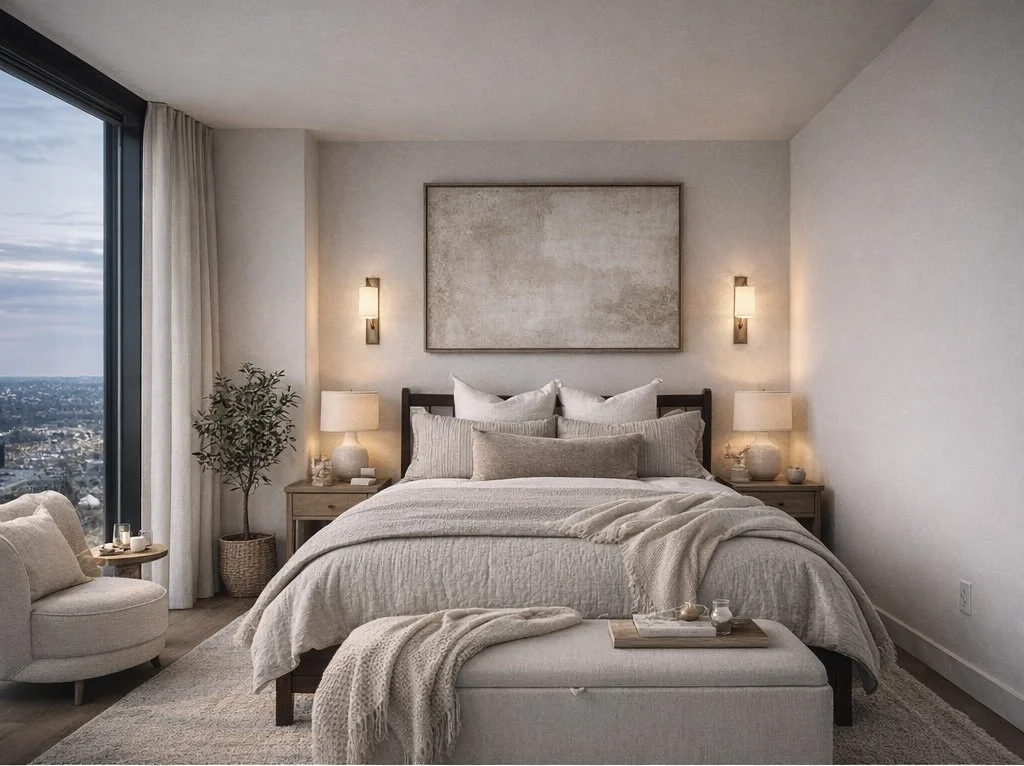
Color has a powerful effect on mood and behavior, particularly for individuals living with dementia. Overly bold colors and busy patterns can feel overwhelming, while soft, cohesive palettes promote calm and stability.
In dementia-friendly interior design, the most effective color palettes include:
Soft blues and muted greens
Warm neutrals and earth tones
Gentle, low-contrast combinations
These tones help reduce agitation and create a soothing atmosphere.
At the same time, intentional contrast can improve functionality. For example, ensuring that furniture stands out slightly from the flooring or that key fixtures are easily distinguishable can support independence.
Avoid busy patterns in rugs, upholstery, and wallpaper, as they can cause confusion. Simplicity is not only elegant—it’s essential.
Room Recognition: Designing for Clarity and Confidence
One of the most impactful elements of interior design for dementia patients is helping individuals easily recognize and understand their surroundings.
When a space is clearly defined, it reduces anxiety and builds confidence.
Design strategies for room recognition include:
Assigning subtle color cues to different rooms
Using consistent, purposeful furniture layouts
Incorporating meaningful personal items such as family photos
Each room should communicate its purpose intuitively. A bedroom should feel restful and familiar, while a kitchen should clearly reflect its function through visible organization.
For added guidance, signage can be incorporated in a refined way—framed labels, soft visual cues, or memory boards that feel personal rather than clinical.
Designing for Emotional Connection and Comfort
Beyond safety and function, a home should still feel like home.
Spaces should encourage connection, warmth, and familiarity. In my experience caring for my mother, I saw how important it was to create an environment that felt emotionally grounding—not just physically safe.
Simple, intentional details make a difference:
A favorite chair placed near natural light
Soft textures and layered fabrics
Personal décor that reflects memories and identity
These elements provide comfort, reduce anxiety, and help maintain a sense of self.
A Thoughtful Approach to Dementia Home Design
Designing a home for a loved one with dementia is an act of care, patience, and intention. It’s about creating an environment that supports both the individual and the family navigating the journey alongside them.
With the right approach, a home can become:
A place of calm instead of confusion
A space of safety without feeling restrictive
An environment that preserves dignity and enhances quality of life
For those seeking dementia-friendly home design or interior design for special care needs, thoughtful design is not just a luxury—it’s essential.
Because the most meaningful spaces don’t just look beautiful…
They support life, provide comfort, and meet people exactly where they are.